Friday, February 6, 2015

Corcoran Family Scrapbook

By John Marks, Curator of Collections and Exhibits

In October I mentioned that Hobart & William Smith Public History students were creating posters on aspects of Geneva and World War II. The posters were on display from November to mid-December. Issues ranged from labor shortages during the war to the German POW camp on Pre-Emption Street, but a number of students focused on the social scene and nightlife during that time. Two basic questions that motivated them were: what was Geneva like during the war, and how did people stay happy?

Eric Lewis loaned us a family scrapbook that addresses the students’ questions. It documents his grandparents Francis George Corcoran and Marion McGuigan before and after they were married.  Frank joined the Navy in November 1943 and was sent 15 miles away to Sampson for basic training.


The photos were all taken outside in a neighborhood so they don’t show us much in the way of Geneva during the war. However, they seem to be large gatherings of family and friends, a pastime neither rationed nor prohibited. Frank was fortunate to be close enough to home to be part of festivities when on leave from basic training.

As for happiness, people continued to fall in love and get married, as Frank and Marion did on May 18, 1944. Frank was still stationed in the US and had leave to come back to Geneva for the wedding. The many photos look like any wedding, regardless of events in Europe and the Pacific.


The scrapbook has numerous postcards and some letters. Servicemen and women had free postage privileges but national security limited about what they could write. Most cards are about missing the recipient or the monotony of service: drilling, waiting to drill, or waiting for mail. Once shipped overseas, one’s location was limited to “at sea” or “somewhere in Belgium”.

In 1945 things did get interesting for Frank, although it’s not obvious from the way things are presented in the scrapbook. There is a water-stained letter dated “Mar. 14 at sea” and an envelope postmarked Mar. 26 1945 with an address for the USS Franklin. The next page has a typed letter from a friend that said, “I was pleased to learn some of the particulars about your safe return from that inferno that raged on the Franklin…”


The USS Franklin was an aircraft carrier off the coast of Japan that was attacked by a single plane on March 19, 1945. Two bombs dropped on the centerline and aft sections that ripped through several decks, setting off fires and explosions. Official Navy casualty figures were 724 killed and 265 wounded; some historians feel the toll was higher. The ship sustained the second largest naval casualties of the war, after the USS Arizona that was hit at Pearl Harbor.

Like many survivors, Frank jumped into the ocean, with the letter in his pocket, and was picked up by another ship. The letter was eventually mailed when the survivors reached Pearl Harbor.


Frank survived the war, came to Geneva, and raised a family. The later photos of family life illustrate something World War II veterans talk about: they did their duty but then they just wanted to get home and get on with their lives. Only in hindsight have many veterans appreciated the scope of their contributions.

Friday, January 30, 2015

Picking Up The Farming Slack in Geneva During World War II

The following material was part of display last fall by John Marks’ Public History class at Hobart and William Smith.

By Cormac McKenna

During World War II, there were many jobs that were being used to aid the war effort. Some of these include railroad workers, foundry workers, fisheries, and farmers. Under the Selective Service and Training Act, farmers (along with the other industries) were not drafted if their trade was necessary to aid the war effort. Many times this was ignored and men in these fields were drafted anyways. Ignoring the Selective Service Act caused labor shortages starting with dairy farms. Local SSA boards had to make decisions on who was necessary to stay, and many times the migrant workers were the ones being drafted into the service. The guide the SSA used showed what foods were necessary to keep growing, and how many acres or heads of animals were necessary to keep that farmer from the war.

By the end of the war, there were almost 1,000 men who were enlisted in the army from Geneva. The loss of these men caused a drop in people who were able to work. While the men from Geneva were being drafted for the war, over one  hundred of military officers from the nearby Sampson military base started moving in. They took up housing in apartment buildings in Geneva. The addition of these military officers led to a misleading boom in population. In reality, the loss of the men from Geneva to the war was very problematic for the farming in the area.

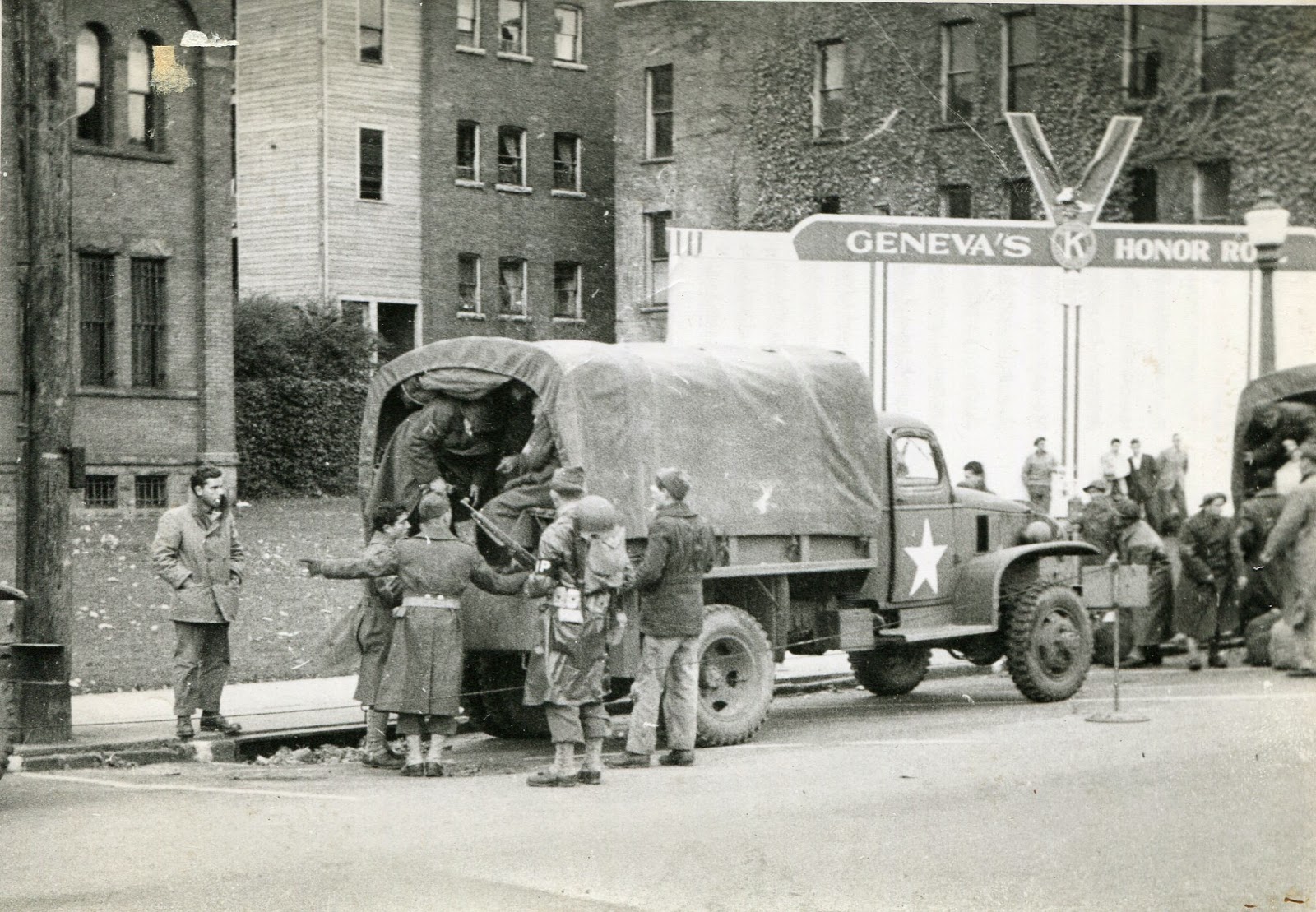
Italian Prisoners of war being shown to their quarters at the State Armory in Geneva to work on farms.
Prisoners of war were used by the masses in New York State during World War II. During the war from about 1944 to 1946, 4,500 POW’s were put to work in labor camps to farm crops that would later help aid American servicemen fighting in the war. Out of those, Geneva hosted 129 Italian POW’s and 279 German POW’s to help harvest carrots, beans, beets, and cabbages. The help from these men was very important to the war effort because about 600 Genevans were volunteering in the war effort, including male farmers.


Many students in Geneva were used as laborers during the war. At first it was only college students and their teachers being recruited to help out on the farms. Before 1942, Geneva school students were also being asked to work in the fields until later legislature disallowed it. These students helped harvesting tomatoes, beets, corn, cucumbers, potatoes, and apples. Students of either gender were selected to work in the fields as they were all seen as capable of doing the same amount of work. The students played a key role in helping with the labor shortages.

With men being drafted to go off to war, women played a crucial part in the U.S. They took on many of the roles in the workforce that were left vacant from men joining in the services. Farms were very important food sources for the men serving in the war. The draft started to take too many men off the farms so in their absence, many women were used to work on the farms. They helped keep the economy stable with their labor in the fields, harvesting thousands of pounds of crops to be sent to the front lines. In Geneva, many women picked up the slack of labor shortages by working in the fields and also working in canneries, canning certain foods needed for the war including tomatoes and cherries.


Friday, January 23, 2015

Little Golden Books

By Kerry Lippincott, Executive Director

Page from Baby Dear

I’m sure everyone has their favorite Little Golden Book.  Mine is Baby Dear.   In the story a little girl receives a baby doll the same day her baby sister comes home from the hospital, and she and her mother take care of their babies together.  I was simply fascinated by Baby Dear and to be perfectly honest I wanted to be the little girl in the book.  With three nieces another generation of Lippincotts will enjoy Baby Dear as well.

My Little Golden Book memory were sparked by a recent traveling exhibit at the Rochester Memorial Art Gallery, Golden Legacy: 65 Years of Golden Books.  During lectures that accompanied the exhibit, I discovered two things.  First, Little Golden Books debuted during World War II.  Second, one of the series’ illustrators lived in Canandaigua.


Prior to the publication of Little Golden Books, pictures books were basically considered a luxury.   Priced between $2 and $3 dollars, picture books were mainly sold at Christmas or available at the library.  Little Golden Books revolutionized publishing by offering inexpensive ($0.25 per book) yet attractive and durable picture books to the masses.   On October 1, 1942 Simon and Schuster released the first 12 books – The Three Little Kittens, Bedtimes Stories, The Alphabet From A to Z, Mother Goose, Prayers for Children, The Little Red Hen, Nursery Songs, The Pokey Little Puppy, The Golden Book of Fairy Tales, Baby’s Book, The Animals of Farmer Jones and The Little Piggy.  Of the original titles only one is still in print – The Pokey Little Puppy.  

Also part of Little Golden Books success is the stories and illustrations.  Noted for her water color and color pencil illustrations of children, Eloise Wilkin (1904-1987) would illustrate 110 books and 47 of those were Little Golden Books.


Born in Rochester, Wilkin spent most of her childhood in New York City.  At the age of 11 she won a drawing contest hosted by the department store Wanamaker’s.  Her winning picture was a pilgrim returning home.  After graduating from the Rochester Athenaeum and Mechanics Institute (now RIT) in 1923, Wilkin set up an art studio in Rochester with a friend.  Unfortunately, the pair struggled to find work so they moved to New York City where Wilkin found freelance work illustrating school books, paper dolls, and books.  The first book she illustrated was The Shining Hour.  She returned to Rochester in 1930 when she married and took a decade off from illustrating to raise her four children.

In 1944 Wilkin was approached by Simon and Schuster to illustrate for the Little Golden Book series.   Her condition was the ability to work from the family home in Canandaigua.  A system was arranged where her editors would send her the text of a book printed on blank pages.  Wilkin would then sketch her ideas in pencil on each page and send the book back to the editors for comments.  The book would go back and forth until the sketches were finalized.  
Page from My Little Golden Book About God
Illustrating as many as three books a year, Wilkin would work exclusively for the Little Golden Books series until 1961 and would occasionally do a book for the series until the mid-1980s.  In 1946 she made her Little Golden Book debut with The House in the Forest by Lucy Sprague Mitchel.  Among her 47 Little Golden Books are My Little Golden Book About God, Wonders of Nature, Little Mommy, The New Baby, Busy Timmy, We Help Mommy, and We Help Daddy.  Her illustrations for Little Golden Books also appeared on calendars, puzzles, Hallmark cards, china plates, record sleeves for Golden Records, magazines and ads.

Wilkin also was attuned to the changes in society.  In We Like Kindergarten (1965) she depicted a racially integrated class and children of color were included in the reprint of My Little Golden Book About God.  The 1975 reprint of The New Baby (1948) contained a more realistic portrayal of pregnancy and with an increase awareness of SIDS the cover no longer had the baby sleeping on her tummy.

Baby Dear
Though illustrating 110 books was quite an accomplishment Wilkin’s dream was to design a doll that was like a real baby.  After twenty years of experimenting and designing, Baby Dear debuted in October 1960.  Produced by Vogue Dolls, Baby Dear had a rag body with moveable arms and legs and came in two sizes (12 inches or 18 inches).  Two years later Baby Dear the book was published with illustrations by Wilkin. 

So, what’s your favorite Golden Book?


Friday, January 16, 2015

Family Memories of War

By Karen Osburn, Archivist

The Historical Society is focusing on the 1940s and World War II in part because of an upcoming event at Club 86 commemorating the music, fashion, resilience, and community of Geneva during those difficult years.  I have researched rationing, radio shows and Christmases during the 1940s and in the process it’s stirred up memories of a conversation I had with my cousin, Andy, at the last family reunion we both attended.

Cousin Andy was born in Belgium during the 1930s and lives with his extended family in Canada today.  He is now in his 80s with a great memory and the ability to ride 50 miles on his racing bike.  He is a very vital person and I would not call him “old” (even if I had a ½ mile head start)!


The last time I had an opportunity for an in-depth conversation with him I asked about a family legend that has endured for years.  The story is that parts of our family were in the Resistance during World War II.  It turns out there is a grain of truth in the story, but it wasn’t quite what we thought.  Before I fill you in on the truth, as we know it, I need to give you a bit of background.

My father’s family emigrated from Belgium to the U.S.A. at the end of World War I.  My grandfather, grandmother, my father, his sister and my grandfather’s brother, Joseph arrived in Michigan after Grandfather decided he was tired of their neighboring country, Germany, trampling over them in the War.  They lived in America for 10 years when my grandfather decided to return to Belgium for reasons I do not entirely understand.  All five family members sailed back to Belgium and the village of Tessenderloo.  By this time my aunt and father were teenagers and did not like living in what no longer felt like their homeland so my grandparents and my aunt and father returned to the U.S. about 8 months after they left.  However, my grandfather’s brother, Joseph, stayed in Belgium to marry and raise a family and endure World War II.

There was a story that I heard repeated often about members of our immediate family being in the “Underground” or Resistance during World War II so I decided to ask Cousin Andy what he remembered about this “legend”.  He responded with an interesting story that I will attempt to reproduce for you.  (Hint, always carry a recorder of some type when you question relatives about family history.) 

The tale unfolds like this…Cousin Andy and his brother, Walter, who were about 10 and 6 years old at the time, were out walking in the countryside not far from their home when they encountered a Canadian soldier whose plane was shot down by the Germans. Being children and not really attuned to the consequences they invited him to come back to their house.  Not all of their neighbors were sympathetic to the allies (or were too afraid of the Nazis) and someone reported them.  There shortly followed a knock on the door and Nazi soldiers demanded everyone go with them to headquarters.  The soldier did some fast talking and managed to convince Germans that he had forced his way into the house and demanded food and assistance.  They took him away and left the rest of the family alone.  From that point on the Nazis watched the family very closely so that no one in my immediate family could participate in the Resistance safely, though Andy said other more distantly related family members were in the Underground and relatives in America supported the movement monetarily.  So our family history was still exciting, but quite a bit different from what we believed.


Of course this led to other stories, some frightening and some a bit humorous which are all part of our family story.  He told how my father, who was in the Army and in Paris, borrowed a jeep and rode to the village in Belgium where the family lived and brought many supplies for them.  Andy talked about riding around the countryside on bicycles with cobbled together excuses for seats and tires to visit other relatives, how their house had a huge hole in the roof and how grateful they were that my dad showed up with clothes, money, and tools they desperately needed. My cousin talked about a munitions factory that blew up killing many people in the town that were forced to work there by the Nazis.


Andy continues to share stories with me every time we talk on the phone.  These vignettes are always interesting and fill in many blanks with information to which I would not ordinarily have access. Many emotions have been stirred by these stories, the most prominent being respect for the citizens who survive a war being fought on their soil. How hard it must be to know you are being watched, not know where your next meal will come from, lose friends and family in the fighting, and watch your children experience real fear.  As we look at the 1940s and the War years I am grateful that so far I have not had to experience these traumas and very glad I have someone who relates this information to me, so that my family’s sacrifices will not be forgotten. 

Friday, January 9, 2015

Zoot Suits

By Alice Askins, Education Coordinator at Rose Hill Mansion

In keeping with our current emphasis on the 1940s, I looked in the local newspapers for zoot suits.  Although zoot suits were known in some form from the early 1930s, the first Geneva reference I found was in 1942.  On November 12 the Daily Times ran a story from Milwaukee about the theft of a pair of zoot suit trousers.  The police lieutenant did not know what those were, so the complainant drew him a picture.  The lieutenant told his men to be on the lookout for a pair of pants “baggy from the ankles up.”

A zoot suit had high-waisted, wide-legged, but tight-cuffed trousers, and a long coat with wide lapels and wide padded shoulders.  It was usually worn with an exaggeratedly long watch chain.  Zoot suits were often pinstriped and made in bright colors like yellow, green, bright blue, and purple.  Zooters often wore fedoras or pork pie hats color-coordinated with their suits.  This style of clothing became especially popular among the African American, Latino, and Italian American communities during the 1940s. 


Cab Calloway in a zoot suit, from the movie Stormy Weather.
Shorting after the US entered World War II rationing became a fact of life.  The War Production Board’s (WPB) first rationing act (March 1942) drew up regulations for wartime manufacturing.  The board hoped to cut back on the use of fabrics by 26%.  Clothing fell under restrictions.  Hems could be only so many inches deep.  Skirt hems could measure only a certain circumference.  Suits lost their vests.  Even such details as belt loops, pockets, and pocket flaps were regulated.  Most people wanted it to be evident that they were complying with the government restrictions and they followed the rules as a demonstration of patriotism. 


Geneva women pointing to their legs, probably to indicate that they are not wearing stockings. 

The WPB rules effectively prohibited zoot suits, which required extra fabric.  Even though most tailors stopped making suits that fell outside the WPB guidelines some men still wanted zoot suits and a network of bootleg tailors based in Los Angeles and New York City continued to make them.  By the 1940s, zoot suits were strongly associated with gang members and gangsters.  In defying wartime restrictions, zoot suiters must have damned themselves further in the eyes of the majority, because the suit deliberately and publicly flouted the regulations.  To the ordinary American, zoot suits were unpatriotic, if not downright subversive.

 A soldier scrutinizes a pair of zoot suiters in Washington, DC, 1942.

Through early 1943, the Daily Times sounded indulgent about zoot suits: 

Jan 2 - American Democracy at Work in New York . . .  A sample of how American democracy works was enacted last night when a Japanese basketball team played a Chinese five, with an Italian referee . . .
The Japanese team won . . . Then about 200 young Chinese and Japanese spectators – all American citizens like the athletes and referee – held a dance, of the zoot-suited jitterbug variety.

In June 1942, though, there were race riots in Los Angeles, between US sailors and marines and mostly Latino zoot suit wearers.  The riots sparked similar incidents in other cities in California, Texas, Michigan, Pennsylvania, and New York.  In LA, more than 150 people were hurt and many Latinos humiliated.  Bands often wore zoot suits as stage costumes, and two of Gene Krupa’s musicians were attacked and beaten as they left a performance.   


 BREAKING THE ZOOTERS – Sailors and other servicemen got tired of being held up and assaulted by zoot suit ruffians in Los Angeles, so they tackled the zooters, beat them up and tore their suits.  Here are some of [the] zooters arrested.  Feud continued in several days of rioting.
The Daily Times followed the majority line on the riots, printing the above picture and caption.   (Present day sources place blame more on the sailors and marines than on the zooters.)  On June 12, it reported that the Governor of California was naming a committee to probe the causes of the riots, and noted that the county grand jury would be meeting to assess “the causes of gang problems in this community.”

On June 30, though, the Times printed an article about a Dr. Fritz Redl, an Austrian refugee then based in Detroit who specialized in child psychology.  Dr. Redl distinguished between groups of people who wore zoot suits – some, he argued, were exclusively focused on dancing, and the suit was their costume. 

Dancing in a zoot suit.   
Some were using the suit to rebel against adults, hoping to elicit annoyance, but that was the extent of their misbehavior.  There were two other groups of zooters, not clearly described in the article, who were edging into criminal behavior, but Dr Redl believed that they just needed better youth programs.  He also considered that “Young people who are not in uniform because of age, physical handicaps or employment seem to feel they can cover their humiliation at not having a standard uniform when they have something grotesque to wear.”   Dr. Redl also saw the zoot suit as a kind of anti-uniform, but suggested that it sprang from envy rather than hostility.  He deplored the riots, claiming that the sailors used the suits as an excuse to attack Mexicans.  “That kind of ‘fun’ is comparable to a lynching . . . This mob spirit, and the labeling of the youths, is the same basic phenomenon that gave Hitler his rise to power . . . “

Los Angeles during the riots.
The remaining zoot suit references I found in the Daily Times were fairly evenly balanced.  A month or so after the riots, the paper printed an article by Joseph E. Dynan from Puerto Rico, arguing that such racist events as the riots were hurting the US image in Central and South America.  In April 1944, the paper compared zoot suits to the clothing of the 1860s, and concluded that there is nothing new under the sun.  In March 1945, the Times explained that a zazou was a Parisian zoot suiter.  I found two further allusions to the suits in 1949, both negative in that the clothing of offenders was emphasized.  One identified two young men who robbed a train as zoot suiters, and the other described a fight at a New York theater between ushers and a “gang” of zoot suiters who were said to have been hanging around the lobby, “hoping to create a disturbance.” 

1949 seems to have been the last hurrah of zoot, because the suits shortly went the way of all fashion.

Friday, January 2, 2015

A Year in Review


Speakeasy at Belhurst
Did you have your password to get into our Speakeasy?

Pre-screening of Club 86: The Documentary at the Smith Opera House
 Featuring first-hand accounts by local residents, Club 86 tells the story of a local supper club that attracted some of the biggest names in music to Geneva in the late 1940s and early 1950s.


Whether inside or outside the classroom, students were provided
a variety of opportunities to explore Geneva's stories.

The Rose Hill Concert Series debuted this summer with Agonal Rhythm, Cool Club, and Allen Hopkins.

Among the activities visitors enjoyed during Jane Austen Day was English
Country Dancing demonstrations by the Country Dancers of Rochester.

Archivist Karen Osburn leading a walking tour for Geneva Night Out.
Partnering with community organizations and participating community
events allows us to share Geneva's stories with a broader audiences. 

Curator John Marks hard at work with his quill pen

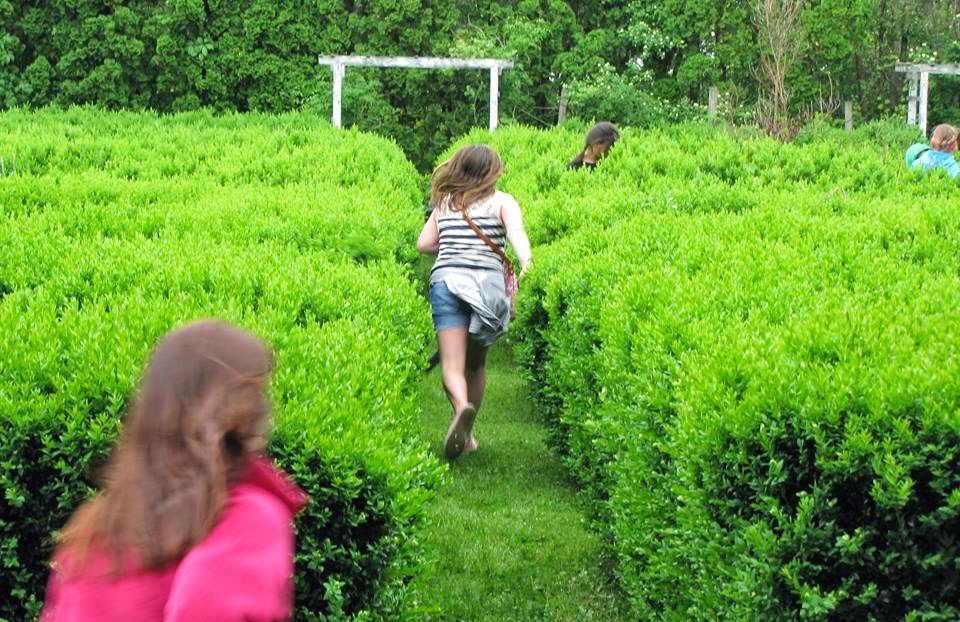
Boxwood garden at Rose Hill.

A fifth generation farmer and his wife traveled from Wisconsin to see the home of John Johnston, "the father of tile drainage in the United States." 


Siding being replaced on the Carriage House.
 From squirrels and carpenter ants to the installation of a propane tank, life is never dull with three historic houses.


 Farm Heritage Day
A surprise visit by members of the Keystone Cops Car Club.
What would you do if six Model Ts showed up at your door?


Docent Dorothy Marino with a group tour at Rose Hill Mansion.
From collections care to assisting with special events, we could not accomplish all that we do without the support our volunteers.

 Reynold’s Battery held a Civil War Encampment on the grounds
of Rose Hill for Seneca County middle and high school students.


Rose Hill Food and Wine

From Beyond: Washington Street Cemetery Stories

Johnston House by "candlelight."

World War II Community Conversation at the American Legion.  

For the past 46 years the Wassail Bowl and Sale has been held on the first Saturday in December. Along with sampling Wassail, fresh greens and wreaths, baked goods, and gifts for the holiday season can be purchased.


View of Seneca Lake


Monday, December 29, 2014

The James M. Cole Circus, Part Two

By Alice Askins, Education Coordinator at Rose Hill Mansion

The Cole Family


 In November 1943, the Geneva Daily Times reported

 Cole, Circus Owner, Inducted Into Army
Penn Yan, Nov. 9—James M. Cole, Penn Yan's 37-year-old circus owner and proprietor, passed his physical examination for induction into the U. S. armed forces in Rochester yesterday leaving Penn Yan with a group of inductees Monday morning.
Cole closed his circus several weeks early this Fall to come home and place his equipment in storage for the duration. He had previously been placed in Class 1A.
Married, Cole has a 3 1-2 year old son.  

You might wonder what the army saw fit to do with Mr. Cole, and in fact it used his experience well.  
Circus Teaches Army Says Penn Yan Soldier In Radio Interview
 Penn Yan, Jan. 17 [1944]—Pvt. James Cole . . . now with a Transportation Corps in New Orleans, Louisiana, recently was featured on a radio program presented by soldiers  . . . over a New Orleans station January 8th[.]  Pvt. Cole told of the highlights of his career as owner and manager of the James M. Cole Circus  . . . He compared his training methods employed by men of the circus with those of the Army . . .  “In both outfits," he said, [“]it is a matter of drill, drill and more drill until each man or animal learns to do a certain job in split second precision."  Pvt. Cole also made mention of the problem of transportation—that of moving an army of entertainers as well as fighters.  He related that the Army studied the methods adopted by the circus in transporting their personnel and equipment.  Some of these methods have since been used, he said.   . . .   
Pvt. Cole's wife, Dorothy, and their 3 1-2-year-old son, Sonny, are . . .  looking forward to the return of Pvt. Cole when the family plans again to take up their circus life where they left off when Uncle Sam sent "Greetings" to "Jimmy" to become a part of the world's biggest "show.”   . . .
 A year after Mr. Cole left for Louisiana, his wife Dorothy and son came to live near him in their house trailer.  The Daily Times reported

Sgt. Jimmy is in the work he likes and understands—transportation, and no job in the Army has proved any more difficult than keeping a motorized circus on schedule in all kinds of weather and over all types of terrain.  Jimmy . . . is helping the Army maintain the fine job they have been doing in moving men and supplies to all fronts to bring Victory to the American forces and their allies.

In December 1945, the Times observed that Mr. Cole had been discharged, and that

. . . he no sooner had returned home than his workers began to filter back, some like himself, wearing the discharged veterans service button.  A lieutenant of Marines, still on duty in Guam awaiting his discharge, wrote to Jimmy this week seeking a job as secretary.  . . .  A discharged sailor of the Merchant Marine called on Jimmy this week to arrange for a candy floss and novelties concession.  "All those three years I was on board ship - even when the torpedoes were flying—all I thought of was that concession. I figured it all out and the minute I was out of service I bought that candy floss machine and now I'm happy," the sailor told Cole.

It is not unusual in post-war adjustments, Cole says, to find veterans eager to take up circus life.  They are restless, want to be on the move and the bustle of the traveling show business offers them the period of readjustment needed before stepping back into civilian life.  After the other World War, numbers of servicemen joined up with circuses to fulfill the urge to move with crowds.
Though German paratroopers did not rain down on the US, people must have seen images like this.

In The Decorative Arts of the Forties and Fifties writer Bevis Hillier studied the imagery of the post-war period in England, and found that circuses appeared frequently.  He believed that the circus stood for, and detoxified, the image of the army.  Mr. Hillier also argued that toy balloons stood for parachutes (something small, harmless, and fun that goes up, replacing something threatening that comes down,) and that mermaids, found frequently in post-war English imagery, replaced the threat of submarines.  I talked to a friend who experienced the post-war period in the US, and she thought this sounded a bit far-fetched.  She is probably right, but it is an interesting thought.  England, with its very different experience of the war, would have coped with it mentally in a different way than we did.  Still, if American soldiers after two world wars found themselves drawn to the circus – a situation where people and equipment move in organized groups for a purpose, but the purpose is fun rather than killing – it suggests that Mr. Hillier might have something there.  It seems reasonable that we would present ourselves with comforting images after stress and fear.

We do have this Times article about bubbles and balloons from October 1945, that ring a similar note:

 Bursting In Air
 
Don’t be surprised if the next thing is a bubble party.  Or has it arrived, with youngsters blowing bubbles at pedestrians up and down Main street?  Who starts such fads, anyhow? Let there be more, for people need escape from the effects of other and sadder globular bursts in the air.
Speaking of these inoffensive, multi-colored spheres that provide a chuckle even when one bounces on the minister's nose or the teacher’s glasses, is this nation aware of the fact that the children of today have grown up without having had the fun of playing with toy balloons?  Toy balloon manufacturers went to war.  Their products became vital in meteorology and for other requirements of the armed forces.  . . .
It's refreshing to welcome back the legerdemain of bubble-blowing.  . . .   here’s to bigger and better bubbles.
Bowl made in the US during the post-war period.