Saturday, March 29, 2014

The First Leg of the Journey Home

By Alice Askins, Education Coordinator at Rose Hill Mansion

When the Johnston family emigrated from Scotland to Seneca County in 1822,  John Johnston’s sister Agnes came with them.  She stayed at Viewfields farm for three years, before returning to Scotland.  She wrote to her sister-in-law Margaret Johnston about the first part of her voyage.  A man named James Grieve (or Greive) traveled with her.   Anne DeRousie, who has studied the Johnstons extensively, believes that Mr. Grieve may have had a family connection with the Johnstons.  In 1825, it would have been improper, and perhaps frightening, for a woman to undertake a long journey without a man to assist her.  I reproduce Agnes’s spelling and punctuation as literally as I can.

I am happy to inform you that I arrived safe at Jersey City on Fri- night after a very tiresome journey of four days.  We did not reach Ithaca the day we started until twelve o/clock at night & had to start at two A. M.  We came to Owego to breakfast & crossed the Susquehanna river at the Great Bend.  . . . then we came into the state of Pennsylvania We reached a place called [illegible] tavern at night.  And I never was in all my life so completely tired out.  I fell asleep in my Chair before we had supper which was about eleven o’clock.  I would very gladly have gone to bed with-out supper but Mr Greive persuaded me to take a little food as I had scarcely taken any thing since leaving home  We were on our way again about two o’clock in the morning – We Had no one but our-selves in the stage all that day and it was nothing but up one mountain & down another until we reached Milford where we put up for the third night  I wished I had you with me to have seen what a wilderness we traveled through that day – We did not see a church for a hundred miles.  I have not seen a place to compare with Geneva since I left it – John used to grumble about people getting tired of a place – you may tell him from me if any of you should get tired he has only to send you down as far as Milford & you would be glad to return – We left Milford about three o’clock in the morning.  We crossed the Delaware river about a mile from there on a ferry setting in the stage there  We reached the State of New Jersey – a poor looking country – The land that is cleared seems to be worn out.  And we reached Jersey City about seven o’clock at night.  There I might have had a comfortable night’s rest if fatigue & the pain in my side had permitted me – Indeed I was quite sick although I did not say much about it – I rested there two days.  James Greive went over the next day & went through a great many vessels but could hardly find one to his mind – At last how-ever he engaged passage for us in an Irish brig for $25 each . . . She is the brig the Prince of the Asturious.  Capt Morris – I am to have the room at the foot of the Cabin stairs . . . and James Greive will have a berth in the Cabin – I came over here [to New York] on Mon Morning & I never saw kinder people than Mr & Mrs. Mc Crae – They made us move our trunks here & stay till our brig sails . . . we are to have Every Thing on board before Eleven o'clock this fore-noon.  The brig is bound for Dublin but has part of her cargo for Liverpool where we are to be landed.  I assure you it is not with-out fear that I trust my-self in her as she seems a very mean looking concern & Every one on board Except Mr Greive & My-self are Irish and I do not know that there will be another feamel [female] on board but My-self.  The Capt—[sic] said He was not sure but that there was an Irish Lady going.  She had not quite determined –

Travelers in 1825 had to buy enough food to last the entire voyage.  Roughly 3300 miles lie between New York and Scotland.  Before steam ships became common, and if you were not wealthy enough to take the fastest clipper ships, you could expect to spend 36 to 42 days crossing the Atlantic Ocean.  Agnes wrote Margaret, “We have got our provisions all purchased . . . I shall have plenty of money have no doubt.”  


An 1827 brig.  A brig is a sailing vessel with two square-rigged masts.  During the Age of Sail, brigs were considered fast and maneuverable.       


Agnes’s letter suggests that a family argument might have led to her decision to return to Scotland:  

I hope John has got over his displeasure at me.  It really was not kind of him to be so severe upon me when he knew that one word from him would have stopped me – I don't think I Ever refused to do what he or you asked me while there and God knows, I would . . . have done any-thing what ever that would have added to either of your comfort.

On the Johnston trip from Scotland in 1822, the ship ran aground off Anticosti Island in the mouth of the Saint Lawrence River.  The passengers had to be rescued.  This mishap must have been in Agnes’s mind as she contemplated another voyage.

  -  I trust in God we shall reach the old English ground in safety  Should it be other wise determined We must submit our-selves to the will of the Almighty who orders all things for the best . . . 

Agnes’s brig was going to Dublin, but it had cargo for Liverpool.  She and Mr. Grieve got off in Liverpool and traveled north to their destination in the area of Dumfries.  As the crow flies, Liverpool is about 115 miles from Dumfries


We do not know whether another female traveled on the Prince of Asturias, or whether the Irish passengers were unkind to the Scottish passengers, but we know that Agnes came to Scotland safely.  Eventually she married and had children of her own.


There are two other letters from Agnes written to her niece Nancy, which was a nickname for Agnes.  One letter is from 1838 and the other from 1842.  Nancy was not born yet when Agnes left for Scotland, so Agnes knew her namesake mostly through letters.  In her letters Agnes urges her nieces to keep writing and to visit her and her family in Scotland.


Friday, March 21, 2014

The War of 1812: Who Cares?

By John Marks, Curator of Collections and Exhibits


It’s been a long, very cold winter, the kind that leads to despair. It’s most evident for me as I start to plan for summer exhibits. This is the bicentennial of the War of 1812 – and 1814 was a significant year in that war  - and we should do an exhibit, but why? Aside from the song “The Battle of New Orleans,” most people don’t remember the War of 1812 or express an interest in learning about it. Maybe we should just open a sports bar in the museum instead.

No, the days are longer, the weather is promised to be warmer, and I will be positive. Here are a few reasons to care about or be interested in the War of 1812:

At the time, it was called The Second War of Independence.
The American Revolution had been won less than 30 years before, and Great Britain still had strong influence in North America. Among other violations, they had been seizing American sailors from merchant ships to serve in Great Britain’s navy, and many felt this war was an important test for independence.

There was the possibility of expanding our territory.
While perhaps not a motivation for going to war, there was the feeling that parts of Canada along our border would welcome being freed from British rule and joining the United States. (This turned out not to be the case.)

It was a big test of the Second Amendment and the militia system.
The Founding Fathers were opposed to having a permanent army and planned on using well-trained and well-regulated volunteer militias for national defense. The War of 1812 proved them to be neither trained nor regulated, although they improved as the conflict wore on.

An 1810 manual for drilling militia units.

New York State was geographically involved in the war.
While the American Revolution and Civil War were, for the most part, fought somewhere else, most of New York was in the thick of things. The northern half of the state shared water or land borders with Canada. Battles were fought along the Niagara frontier, at Sackett’s Harbor and Plattsburgh, and New York City and the Hudson River were strategically important.

Niagara River, with Fort George (Canada) on left, Fort Niagara (US) on right

The challenge, as with all exhibits, is to convey this to and engage with visitors. (An additional challenge is the rarity of artifacts from the war.) If most of the visitors read most of the exhibit panels, and about half of them think or say, “Huh, I didn’t know that! That’s interesting,” we call that a good day at the office. 

Geneva and the War of 1812 will open Friday June 6. 

Wednesday, March 12, 2014

Reading Old Handwriting

By Karen Osburn, Archivist and City of Geneva Historian


We have some very interesting old letters, journals and diaries in the archives at Prouty Chew House and I love reading some of the entries.  It isn’t always easy for a variety of different reasons.  Sometimes the handwriting is faded and/or blotchy.  Other times the person who wrote the piece used such flowery script that it is like trying to “read” a piece of abstract art, for instance is that letter an uppercase F or a T?  Is the word Taking or Faking?  Sometimes the spelling doesn’t make sense as spelling wasn’t standardized as it is today and was less important than beautiful script in the early 1800s.  Sometimes the person writing the letter conserved paper and wrote horizontally and then vertically across the paper. 

It is often difficult for me to read a letter from the 1800s, but some of the students who come to do research or help with the archives have an even harder time than I do with the flow of letters.  Computers seem to have changed peoples’ ability to read and write cursive letters.

The first time I noticed the change was when I had a college student ask me to read a document for him.  The handwriting on the particular paper wasn’t very bad and I was a bit perplexed until the student explained that he was not taught to write in cursive and was unfamiliar with it.  Wow!  This may make transcription of old letters much more difficult when potential volunteers are no longer familiar with “long hand” just printing or computer fonts.

I love to experiment with different computer fonts and I admit that some of them can be somewhat hard to read, i.e. Vivaldi, Brush Script, Edwardian Script, Fiolex Girls, or Outright Televis to name a few.  I also remember when there were no computer (Yes, I am that old!) and our grade school teachers taught students good basic handwriting in self-defense. Can you imagine trying to read 30 third or fourth grade student papers when the printing or cursive writing on them made real hen scratches look legible? 


My fourth grade teacher gave me a D in handwriting on my final report card of the year.  My parents made me write one paragraph every weekday all that summer before I could go out and play. They picked the paragraph and believe me it was never short. If I was too quick and sloppy I had to write a second paragraph to reinforce practice.  By the end of the summer I could write well enough to please my fifth grade teacher and get passing marks in handwriting.  I don’t know if handwriting is even taught in schools anymore, but I don’t think it is stressed like it was in the 1960s.

So how do we go about reading old handwriting?  Practice, practice, practice!  With some documents, you can scan them, blow them up and see if that helps decipher the letters.  With others you could scan the document and then play with the contrast on a photo program and see if that helps make it readable.  You might try putting a piece of paper over the letters so only the top half or bottom half is visible, a trick I learned in a workshop that sometimes helps. Usually, I try to figure the word out from the context of the sentence. Or I try to look for an unrecognizable letter in a different word and decipher the meaning, which is tedious, but often works. Reading old handwriting can be a chore, but the end result can be fascinating!

Does it matter if students can’t read or write cursive writing?  The answer is yes and no. Does it matter if today’s students can’t write well with pen or pencil? Since the majority of students have some form of computer access, probably not.  The important thing is that they can think rationally, communicate coherently, and convey instructions and ideas effectively using a computer as their pen and paper.  It could help to develop a reasonably legible signature, but computer documents are adequate for communication purposes.

The other question is does it matter when students can’t read handwriting?  Here I say yes! It matters if you are able to read.  Our ability to read can help us effectively learn from people in the past, be it your great, great grandmother, a person who signed the Declaration of Independence, a doctor, lawyer or veterinarian.  The ability to follow written directions is important and not every document you have to deal with will be legibly hand printed or typed and printed on a computer. Reading script is not yet in the same realm as trying to read hieroglyphics.  Our alphabet is still the standard for written English and it is helpful to be able to read the ABCs in any form of script being used whether it is ABC, ABC, ABC, ABC, or ABC.  Even if people no longer use script to write I think it pays to be able to read it since you never know when you may need to read a document written.  Who knows, a favorite cousin may leave you a small fortune in a handwritten will someday and it will certainly be important that your lawyer understands how to decipher what was written.  There is a big difference in inheriting one million dollars or one willow doll cupboard don’t you think?


Friday, March 7, 2014

Everything is Coming up Bloomers!

By Kerry Lippincott, Executive Director

For over forty years Elizabeth Smith Miller (1822-1911) called Geneva home.  An advocate for women’s suffrage, she formed the Geneva Political Club with her daughter and brought several famous suffragettes like Susan B. Anthony, Carrie Chapman Catt, and her cousin Elizabeth Cady Stanton to speak in Geneva.     Known as a gracious hostess and accomplished cook, she published In the Kitchen in 1875. The book included various recipes and tips on entertaining, and went through several editions.  Miller is also credited with being the first woman to wear bloomers.  With the mention of bloomers one might instantly think of women’s underwear.  But Miller’s bloomers were an outfit where the pants gathered at the ankle with a knee length dress worn over the top.

Fashion Plate from Godey's Lady's Book, April 1851

In today’s society where a woman in pants is pretty tame compared to some outfits that are out there, Miller fashion choice in 1851 was extremely radical.   In the early 1850s women wore several layers of clothing.  The layers included a chemise, corset, several layers of petticoats (before the introduction of the hoop skirt in 1856 this could mean 8 to 10 petticoats), and a long skirt.  When completely dressed a woman’s clothing alone could weigh almost twenty pounds! Miller described the day when she had enough and developed a pattern based on an outfit she saw while in Europe:

In the spring of 1851, while spending many hours at work in the garden, I became so thoroughly disgusted with the long skirt, that the dissatisfaction... suddenly ripened into the decision that this shackle should no longer be endured. The resolution was at once put into practice. Turkish trousers to the ankle with a skirt reaching some four inches below the knee, were substituted for the heavy, untidy and exasperating old garment. 

The Bloomer Outfit

During a visit to Stanton in Seneca Falls, Miller wore her new outfit.  She not only inspired Stanton to adopt the outfit but Amelia Bloomer, editor of the local temperance newspaper The Lily, as well.  In addition to wearing the outfit, Bloomer wrote articles about it, printed illustrations of it and published instructions on how to make it in The Lily.  Bloomer’s articles on the new outfit were re-printed in newspapers across the country.  This is why the outfit became known as bloomers and not millers.  

Whether for comfort or health reasons, several women across the country began wearing bloomers.  However, these women were soon ridiculed in the press and in public.  Critics saw the new outfit as unwomanly and considered it one step towards women becoming men.  Others saw the outfit as immoral as woman’s ankles were simply not meant to be seen.  Citing Deuteronomy’s prohibition on cross-dressing, some critics went as far to say the Bible was anti-bloomer.

Anti-bloomer cartoon

Since many of the women who wore bloomers were also advocates for women’s rights, it was felt that bloomers were drawing attention away from the cause and slowly these women went back to wearing skirts and petticoats.  Miller would wear bloomers for seven years.  She would later write:

I wore the short dress and trousers for many years, my husband, being at all times and in all places, my staunch supporter... The dress looked tolerably well in standing and walking, but in sitting, a more awkward, uncouth effect, could hardly be imagined... 

So, by degrees... I lost sight of the great advantages of my dress - its lightness and cleanliness on the streets, its allowing me to carry my babies up and down stairs with perfect ease and safety, and its beautiful harmony with sanitary laws, consequently the skirt was lengthened several inches and the trousers abandoned. 

As months passed, I proceeded in this retrograde movement, until, after a period of some seven years, I quite "fell from grace" and found myself again in the bonds of the old swaddling clothes - a victim to my love of beauty... 

All hail to the day when we shall have a reasonable and beautiful dress that shall encourage exercises on the road and in the field - that shall leave us the free use of our limbs - that shall help and not hinder, our perfect development.


Though women would have to wait until the 1930s for it to be respectable for them to wear pants and shorts in public, Elizabeth Smith Miller is still owed a huge thank you for taking the first steps.

Elizabeth Smith Miller with her daughter Anne

Thursday, February 27, 2014

Lighting at Rose Hill

By Alice Askins, Education Coordinator at Rose Hill Mansion

For some time I’ve been telling visitors that we did not know exactly when electricity came to Rose Hill.  Recently, I found the answer to that question.

Advertisement for carbide gas household lighting, ca. 1915-20
Geneva Advertiser   September 23, 1890
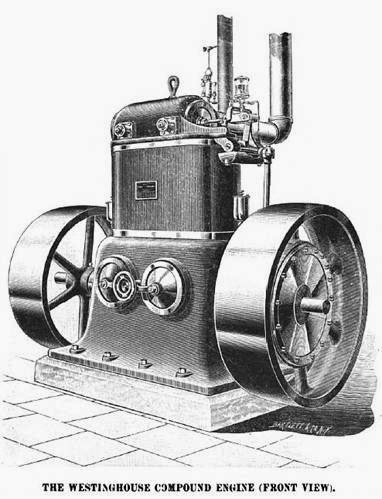
People who happened to cast their eyes across Seneca Lake last evening must have been a little surprised to see so much illumination about the Rob' t J. Swan mansion, now the home of E. H. PLUMMER.  The occasion was the starting up of his new electric light, and . . .  quite a number were invited over to inspect the house and the plant.  About seventy responded, returning by carriages at a little after ten o'clock.    . . . [Rose Hill] is elegantly furnished from bottom to top, with electric light in every room and about the grounds.  He has a Dunning horizontal boiler, a Westinghouse engine and a dynamo of the United States Co., and the whole runs with less noise than a sewing machine.  . . .

According to the newspaper, Mr. Plummer came from Detroit, and he intended to make Rose Hill a race horse breeding and training farm.  He had plans to build a mile-long track (or at least a half-mile track) and spend the rest of his life at his new farm.  Three years later, he had sold the place.  Three years after that, Martin Smith of Geneva bought Rose Hill.  On February 14, 1896, the Geneva Gazette reported that “M. H. Smith, Esq., has purchased the magnificent Rose Hill farm on the east shore of Seneca lake  . . .   The mansion has 28 rooms, is heat [sic] by steam and lighted with gas generated on the premises.”

An exchange of emails with our Curator John Marks informed me that the gas lighting in question was probably carbide or acetylene light.  In 1892, the Canadian inventor Thomas Willson discovered an economical process for creating calcium carbide.  This was an important step in the industrial revolution in chemistry, and it was made possible in the United States by the massive amounts of cheap power produced at and by Niagara Falls.  Carbide was also useful for lighting.  Water combined with calcium carbide released acetylene gas, and it became available for domestic lighting in 1894.  The gas was piped through the house to fixtures where it burned.  Though it was prone to gas leaks and explosions, it produced a very bright flame and was inexpensive.  In fact, it was advised that you extinguish your cigar before refilling the system. 

Diagram of a house with carbide lighting 

Carbide lighting was largely used in rural homes, though the Daily Advertiser    said in January, 1896, that “Now is the time for cities desiring to operate their own gas plants to begin.   Acetylene gas, the new illuminant, is 40 times more brilliant than that used ordinarily.  People using it will therefore get much more light for less money.   . . . Besides being so much more brilliant, acetylene gas does not flicker, which will make it still more desirable.”

I had to wonder, though, what happened to Mr. Plummer’s electrical system. There may be a hint in the paper.  In 1893, Mr. Plummer tried to auction off all the stock and equipment at Rose Hill.  The sheriff of Seneca County showed up and attached most of what Mr. Plummer was trying to sell.  This suggests that Mr. Plummer was in financial straits and trying to sell things that other people claimed.  The electrical system might have been repossessed, or eventually sold.  It might also have been removed by the next owner of the property, Mr. H. S. Hopkins. 

A Westinghouse steam engine, 1890

However the electrical system disappeared, there are reasons a homeowner might have preferred carbide.  As my engineer brother Paul explained it to me, a steam powered dynamo running a generator would require more effort to turn on the lights, compared to the carbide generator:
  1. Steam/Electric: 
  2. Start a fire (probably coal.)
  3. Wait for steam.  Monitor water level in boiler constantly so as not to have the house blown up.  By the 1890s they would have had semi-automated boiler water level control, but not so automated that it would not have to be watched.
  4. Start the steam engine.  Monitor throttle setting for proper voltage.
  5. Ongoing maintenance:  boiler cleaning, fire box cleaning, ash removal, steam engine oiling and packing repair, steam pipe repair, light bulbs.
An Edison generator ("dynamo") from 1890

Carbide:

  1. Fill tank with water.  Dump in enough carbide powder for a while.
  2. When lights dim, pour in more carbide.
  3. Ongoing maintenance:  empty and refill the water tank, maybe replace the tank now and then, replace the lamp mantels, and occasionally repair gas pipes. 


Carbide seems to have been the way to go.  Now, at least, I can explain to visitors that electricity came temporarily to Rose Hill in 1890 – but after that, mysteries remain.
  
Carbide Lamps


Friday, February 21, 2014

Geneva House Architecture

By John Marks, Curator of Collections 

Geneva has great residential architecture. If you think I’m going to say, “because of South Main Street,” you’re wrong. A city’s housing stock is much more than a single street.

Variety
With few exceptions, we have one house of every architectural style of the 19th and 20th centuries. Think I’m making this up? We have an octagon house from the 1850s; only 173 were built in our state and most are not in the fine condition of this one on North Street.


We have a Mediterranean-influenced house and Spanish eclectic style on North Main Street, fairly close to each other. The houses may have reflected the owners’ heritage, or perhaps they saw images in a builder’s pattern book and said, “I’ll take that one.”


Most Genevans know of the “Frank Lloyd Wright house” on Washington Street. In spite of weeks of research, its owners have not found the architect who designed it. While not by Wright, it is a good example of Prairie Style architecture.


There is even an International Style house on Lochland Road. Now, it is mostly hidden by trees and shrubs; that is good or bad, depending on your feeling about this minimalist style.


Timeline
If you know architectural styles and when they were popular, you can tell when a street was developed. In the case of Washington Street, there is a fairly clear timeline going east to west.


Original Structures
While some buildings have been altered, for better or worse, most houses in Geneva still stand where they were built. Few old houses were destroyed to build a more modern style on the same spot; rebuilding after a fire is an exception. North Main Street is exceptional for its lack of infill (new buildings on a street of much older architecture) and its variety of styles, from Federal to Shingle to the eclectic styles shown earlier.


Geneva’s houses may reflect the wealth of the original owners and changing architectural styles. They also hint at the stories of families who chose how their house would look, for reasons lost to time.

Wednesday, February 12, 2014

Thinking Spring

By Karen Osburn, Archivist

I know some folks enjoy winter, but I am not one of them.  Right now I am very tired of hats, coats, gloves, boots, shovels, salt, shovels, ice, below zero wind chill temperatures, yak trax, shovels, salt, shovels and everything ( did I mention shovels?) about winter.  While perusing some photos in the archives I came across some images of a snowstorm that buried Geneva in 1925.  The photos are from the end of January and beginning of February.  The images of Exchange Street are impressive, with streetcars and automobiles drifted up to their windows.  I was reminded that this doesn’t happen very often in Geneva. We are fortunate enough to be in a place that seems to get bypassed by the worst of the winter weather.  Yes, we get the bitter cold, but we don’t seem to get the snow that places like Buffalo, Syracuse, or Rochester get. I am quite happy about this.  Still I can’t help but wonder if the residents of Geneva in the 1920s, 1960s, 1970s and other memorable tough winter years waited impatiently for nursery catalogs the way some of us do today.


For me, the colorful nursery catalogs are harbingers of spring, much like the robins, red winged blackbirds and crocuses.  Even though I don’t really have a place to put in many plants just the thought of gardens full of flowers, vegetables and trees or bushes loaded with fruit are warming to my beleaguered winter spirit. 

I look at maps of Geneva from the 1850s and see acres of land occupied by nurseries and wonder if the horticulturalists and nursery owners waited as impatiently as I do for the first blooms of spring to show themselves?  I wonder if they planned their gardens and new plantings as eagerly as some of us will at the end of this winter?  I suspect they did, how could they resist the multitude of colors and fragrances they knew would become available in the warmer weather?


Did you know that Geneva and many of the towns and cities in upstate New York were once home to many nurseries?  Geneva had W. & T. Smith, Maxwell Bros., to name only two of our many nurseries.  We also had the New York State Agriculture Experiment Station.  Newark, NY had Jackson and Perkins Roses.  Rochester had Elwanger & Barry’s Mount Hope Gardens, VanPuttee Seeds and other nurseries plus Highland Park to showcase gorgeous plants .The upstate area was a hot bed horticultural innovation and it showed. 

The New York State Agricultural Experiment Station developed several varieties of apples and grapes including: Cortland, Empire, Jonagold, Jonamac and Macoun apples and ‘Noiret’, ‘Corot noir’ and ‘Valvin Muscat’ grapes.  They have also bred various new types of berries and other plants.


Jackson and Perkins developed many new varieties of roses during their time in Newark.  I remember one called “Tropicana” which my mother grew.  It was a beautiful shade of coral and smelled a bit like sweetened tea.  It was lovely.  My grandmother had a very small yard in Rochester and crammed it with as many roses as she could.  The smell of warm earth and roses from June through August plus the buzzing of bees making their way from flower to flower remain some of my best memories from childhood.

Today, New York State is home to 58 species of wild orchids in shades of pink, yellow, white, and brown.  Among the showiest orchid of our native species are the “Lady’s Slippers” often found in pink and yellow.  We are also part of an area filled with extensive grape vineyards and many orchards of apples, apricots, peaches, cherries, plums, and nectarines.  Numerous small variety farms grow strawberries, blueberries, raspberries, gooseberries, red and black currents, dahlias, gladiolas, peonies, squash, tomatoes, peppers, potatoes, beans, cabbages, broccoli, cauliflower, kohlrabi, kale, spinach, and rhubarb. I don’t think I have even come close to naming all the crops grown in this area.


How can I not look forward to spring?  Even when I don’t grow the crops myself nursery catalogs and the hint, the tantalizing thought of spring help me shovel that last pile of snow, throw salt on the last bit of ice, pull on my yax tracks one last time, because I know that around that corner are the colors of spring, the smells of spring and the taste of spring.  Spring is coming!